
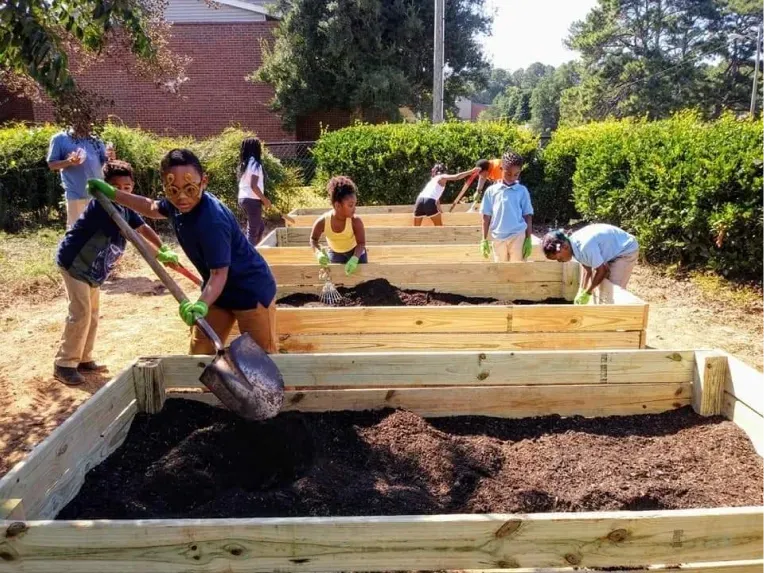
Grow Food That Supports Your Daily Health
Custom raised bed vegetable garden installation designed for accessibility and usability in Decatur
When you grow your own vegetables in Decatur, you control what goes into the soil and onto the plants, and you spend time outdoors in a way that connects you to the food you eat. A raised bed garden makes this easier by bringing the planting surface to a comfortable height, improving drainage, and allowing you to fill the bed with quality soil regardless of what exists in your yard. The act of planting, tending, and harvesting also provides a grounding routine that supports mental clarity and stress reduction.
LMM Landscaping Services designs and installs custom raised bed vegetable gardens in Decatur that are built for ease of use, visual appeal, and integration with the rest of your landscape. Each bed is planned based on where you receive full sun, how much space you want to dedicate, and what you want to grow. The installation is handled turn-key, from bed construction to soil filling and initial planting guidance. The design is guided by proven horticultural practices and long-term planning, and the goal is to make growing food at home accessible and sustainable.
If you want to start growing your own vegetables in Decatur with a garden that is built to last, contact LMM Landscaping Services to discuss layout and material options.
How the Beds Are Built and Prepared
Installation begins with a site visit to your property in Decatur to identify where the beds will receive at least six hours of direct sunlight and have access to water. The team discusses bed dimensions, height preferences, and whether you want single or multiple beds. Raised beds are typically built with untreated cedar, composite materials, or galvanized metal, and they are assembled on-site with reinforced corners and level bases.
After the beds are installed, you will notice improved drainage, warmer soil temperatures that extend the growing season, and a planting surface that reduces strain on your back and knees. The beds are filled with a custom soil blend that includes compost, peat, and vermiculite for aeration and moisture retention. You can plant immediately after installation, and the elevated design keeps plants away from ground-level pests and reduces weed pressure.
LMM Landscaping Services handles bed construction, soil sourcing, leveling, and initial planting guidance as part of the project. The work does not include irrigation system installation or ongoing garden maintenance unless arranged separately. The finished garden integrates seamlessly into your landscape and becomes a functional, productive part of your outdoor sanctuary.
Homeowners often want to know what size bed makes sense, what soil is used, and how much maintenance is required. These are the most common questions asked before starting a raised bed garden project.
Answers to Questions That Come Up Early
LMM Landscaping Services has been designing outdoor spaces in Decatur for over 30 years, including functional gardens that support healthier living through home-grown food and hands-on outdoor connection. If you are ready to start growing your own vegetables, learn more by scheduling a consultation to discuss bed placement and material options.